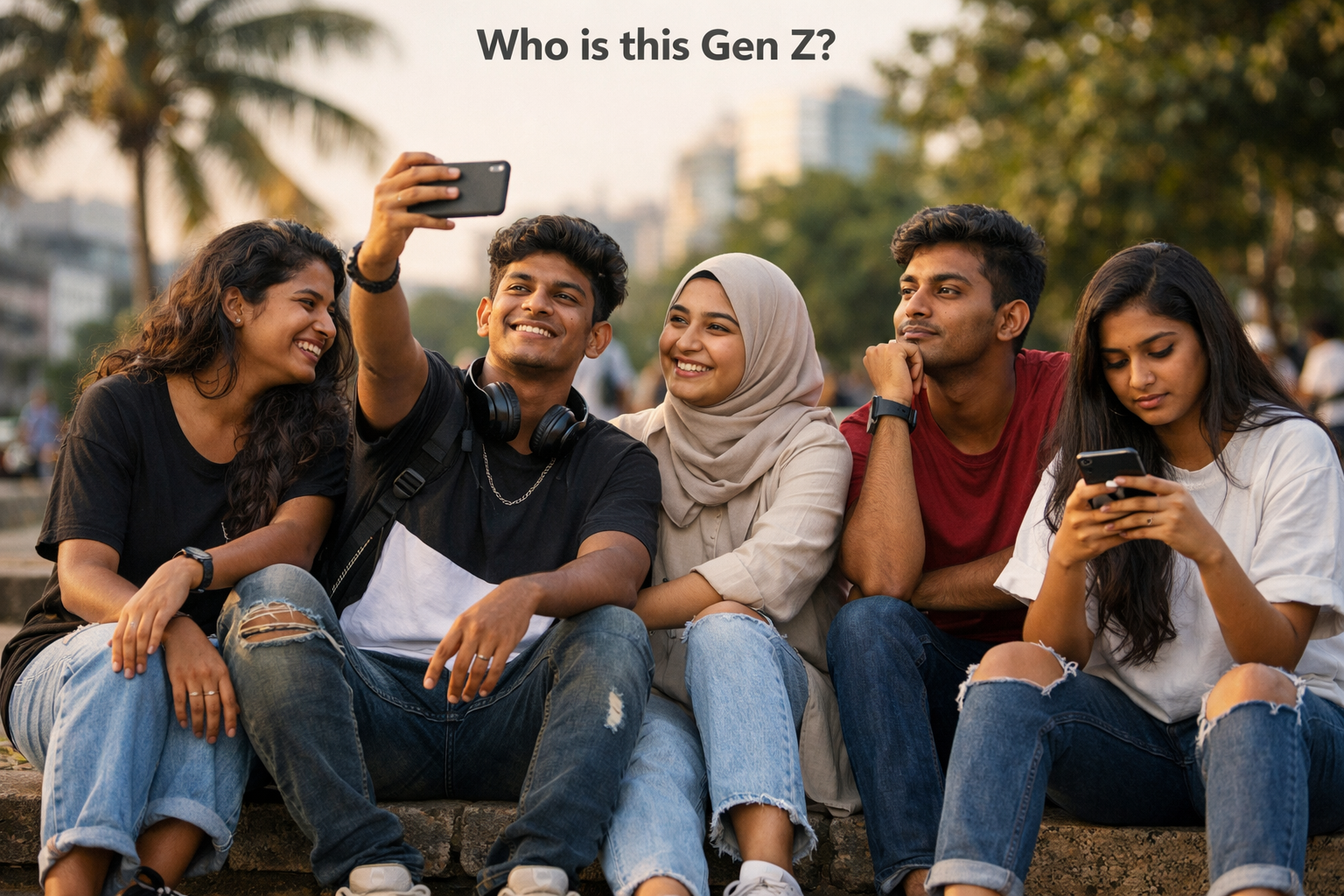
The generation that grew up with the internet in their pocket, climate anxiety in their chest, and a burning need to rewrite every rule they inherited.
01 — Born Into the Storm
Generation Z — born between 1997 and 2012 — is the first generation to have never known a world without the internet. While Millennials remember dial-up and the transition to smartphones, Gen Z was handed a touchscreen before they could read.
They currently make up nearly 2 billion people globally and will represent 27% of the global workforce by 2025. Ignoring them is no longer an option.
But they're not the lazy, entitled caricature that some headlines paint. They're a generation of contradiction — fiercely independent yet deeply collaborative, chronically online yet desperately seeking real connection, pragmatic realists carrying deeply idealistic values.
02 — The World That Shaped Them
To understand Gen Z, you have to understand what they grew up watching.
They came of age during the 2008 financial crisis and watched their parents lose jobs. They went through school shooting drills while scrolling social media. They felt the weight of climate change not as a distant threat but as a daily anxiety. And just as many were stepping into adulthood, a global pandemic shut everything down.
These events didn't make them fragile. They made them radically realistic. They don't dream of a perfect future — they want systemic change, and they want it now.
"Gen Z didn't just witness crises — they grew up inside them. That changes how a generation sees the world, what they trust, and what they demand."
03 — Values That Actually Mean Something
Gen Z doesn't separate personal values from how they spend, who they work for, or what brands they support. It's all connected.
Here's what they stand for:
🧠 Mental Health First — The most open generation about mental health. They've normalized therapy, boundaries, and saying "I'm not okay."
🌍 Climate Urgency — Not a political issue — an existential one. They demand real sustainability, not greenwashing.
🏳️🌈 Radical Inclusivity — Diversity isn't a quota. It's a baseline. Gen Z is the most diverse and gender-fluid generation in history.
🎭 Authenticity Over Perfection — Polished, curated content feels fake. Raw and honest resonates. They can smell PR spin from miles away.
⚖️ Social Justice — They don't just post — they organize, boycott, and vote with their wallets.
🔍 Skepticism of Institutions — Government, corporations, traditional media — all viewed with heavy suspicion. Trust must be earned, not assumed.
04 — How They Consume Content
Forget the 30-second commercial. Forget the long-form editorial. Gen Z's attention is short, sharp, and deeply selective — but earn it, and their loyalty is extraordinary.
TikTok didn't just create short-form content — it rewired expectations. They prefer creator-led content over brand campaigns, and trust a 19-year-old reviewer on YouTube more than a prime-time ad.
Here's the Gen Z content formula:
- Platforms: TikTok, Instagram Reels, YouTube Shorts, BeReal, Discord, Twitch — all at once.
- Format: Video first. Audio-off friendly. If it takes more than 3 seconds to get to the point, you've already lost them.
- Tone: Conversational, self-aware, slightly ironic. Memes are their primary language.
- Trust: They follow people, not brands. Authenticity beats celebrity endorsement every time.
05 — Gen Z at Work
Gen Z is entering the workforce and immediately making HR teams rethink everything.
They're not here to climb the corporate ladder quietly. They want purpose, flexibility, transparency, and real growth — and they're not afraid to leave if they don't get it. They've watched Millennials burn out chasing hustle culture and decided: hard pass.
They talk openly about salary. They call out toxic culture. They push back on poor leadership. And they're building side businesses in parallel with their day jobs — not out of financial desperation, but out of entrepreneurial ambition.
"A paycheck is the minimum. Gen Z wants to know: Does this work matter? Does this company actually care? Can I grow here — as a human, not just an employee?"
Remote and hybrid work isn't a perk for them. It's a baseline expectation.
06 — Their Complicated Relationship with Money
Gen Z is the most financially anxious generation — and arguably the most financially savvy.
They grew up watching homeownership become a fantasy and student debt become a crisis. So they adapted. They started investing earlier than any previous generation, explored cryptocurrency with curiosity, and turned side hustles into serious income streams.
At the same time, they spend with intention. A brand's supply chain, environmental record, and social stance directly affect whether Gen Z clicks "Buy Now." They'll pay more for values — and boycott without hesitation.
📊 Quick stats:
- 54% started investing before age 21
- 73% want to own a business someday
- 3x more likely than older generations to research a brand's ethics before buying
07 — Mental Health & Identity
No generation before Gen Z has talked about mental health as openly — or as necessarily.
They've normalized therapy, set boundaries without apology, and loudly rejected the idea that suffering in silence is strength. But here's the paradox: they're also the loneliest generation. Heavy social media use, public performance pressure, and constant comparison have taken a serious toll. Anxiety and depression rates among Gen Z are significantly higher than previous generations at the same age.
On identity, Gen Z is more fluid and more questioning than any generation before. Labels feel constraining. Exploration feels natural. Whether it's gender, sexuality, career identity, or culture — they resist being put in a box.
"The generation that invented the 'vibe check' is quietly asking: does anyone actually get me?"
08 — Gen Z vs. Millennials: The Real Difference
They are constantly lumped together, but they are quite different in how they see the world.
When it comes to technology, Millennials adopted digital life as teenagers and young adults. Gen Z was born into it and has never known anything else. When it comes to work, Millennials chased hustle culture and were largely loyal to employers. Gen Z prioritizes work-life balance and is loyal first to themselves.
On optimism, Millennials entered adulthood believing they could change the world. Gen Z entered adulthood wanting to fix what is already broken right now. On social media, Millennials built polished Instagram grids and Facebook profiles. Gen Z gravitates toward TikTok, BeReal, and raw, unfiltered content.
When it comes to finances, Millennials aspired to homeownership as a life milestone. Gen Z questions whether that is even realistic anymore. On mental health, Millennials began normalizing the conversation. Gen Z fully normalized it — therapy is simply standard practice, not a last resort.
On humor, Millennials used memes as entertainment. Gen Z uses memes as a primary language and a coping mechanism. And on identity, Millennials largely operated within more defined categories. Gen Z is fluid, label-resistant, and deeply comfortable with ambiguity.
09 — What the World Needs to Understand
Gen Z is not a problem to solve. They're not a marketing segment to decode. They're not "just kids" who'll eventually fall in line.
They are a generation that looked at the world they were handed — the inequality, the climate emergency, the mental health crisis, the broken institutions — and decided they'd rather rebuild than inherit.
They are pragmatic dreamers. Skeptical believers. Loudly vulnerable and quietly resilient. They use memes to process grief and social media to start movements. They'll call out your brand for greenwashing, then stay up until 3am building their own ethical startup.
"Stop asking what's wrong with Gen Z. Start asking what's wrong with the world they were handed — and what we can learn from how they're responding to it."
The businesses, leaders, and institutions that will thrive in the next decade are the ones who learn to genuinely listen to this generation. Not to market to them. To collaborate with them.
Because Gen Z isn't just the future.
In many rooms, they're already the present.